
Blog
What to do in Fréjus if you love old stones just as much as the Mediterranean? This town on the French Riviera combines rare Roman heritage, a long sandy coastline and the Esterel massif on its doorstep. Between ancient arenas, lively beaches and protected natural areas, the town can be enjoyed at any age. To plan a quiet stay, a luxury campsite makes the ideal base.
Here are eight visits to build your days around!
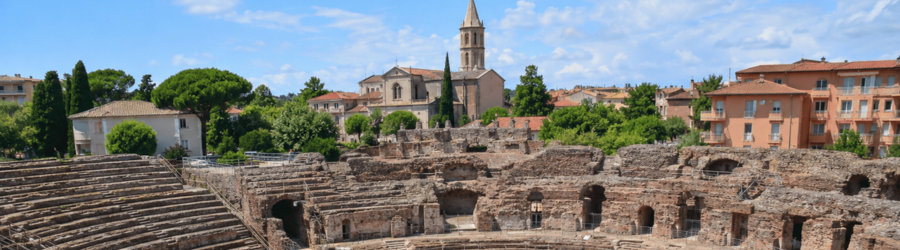
The first thing to do for what to do in Fréjus is to head to the arena, one of the oldest amphitheatres in Roman Gaul. Built in the 1st century, the elliptical structure measures 130 by 100 metres and held around 10,000 spectators. Restored, it still hosts concerts and shows during the summer. The self-guided visit gives young and old a glimpse of daily life in Forum Julii, the town envisaged by Julius Caesar.
Visitors’ favourite: the restored tiers, where you can picture the ancient games against the Provençal backdrop.
Practical information:
In the heart of the old town, the episcopal complex forms one of the finest medieval ensembles in Provence. Saint-Léonce Cathedral, built from the 5th century and later remodelled, adjoins an early Christian baptistery, one of the oldest in France. Its two-storey cloister stands out above all for its painted ceiling, covered with a unique fantastical bestiary. The coolness of the galleries offers a welcome break after the sun of the lanes.
Visitors’ favourite: the cloister ceiling and its hundreds of small medieval paintings to track down.
Practical information:
Away from the centre, the Chapelle Notre-Dame-de-Jérusalem bears the signature of Jean Cocteau. The artist designed its plans and frescoes at the end of his life, without seeing the building completed. The walls are covered with figures inspired by the Knights of the Order of Jerusalem, in instantly recognisable pastel tones. This intimate place contrasts with the great ancient sites and will delight lovers of 20th-century art.
Visitors’ favourite: the gentle Cocteau frescoes, a rare religious testament from the artist.
Practical information:
Need some calm to work out what to do in Fréjus away from the bustle? The Villepey ponds form one of the few preserved lagoon areas on the French Riviera. Listed as Natura 2000, this site of more than 250 hectares is home to herons, flamingos and rare plants, between pine woods and brackish water. Waymarked trails make it possible to walk around the whole area, away from the summer crowds.
Visitors’ favourite: birdwatching early in the morning, when low light sweeps across the reed beds.
Practical information:
No stay is complete without a walk along the seafront. Fréjus-Plage stretches out as a long ribbon of fine sand, lined by a lively promenade of cafés and ice cream stands. Right next to it, the François Léotard nature base covers 135 hectares dedicated to sport and leisure: cycle paths, play areas and a car-free beach. Families and sports lovers find plenty of ways to get active facing the Mediterranean.
Visitors’ favourite: the stroll at the end of the day, when the sun sets behind the Esterel.
Practical information:
To keep the children busy, the Aqualand water park remains a reliable choice in the resort. Giant slides, a ring-buoy river and a wave pool set the rhythm of hot summer days. The little ones have safe areas, while thrill-seekers race down the big slides. It is the ideal spot to take a breather between two cultural visits.
Visitors’ favourite: the thrill slides, a hit with teenagers coming to cool off.
Practical information:
Fréjus surprises with one of the oldest Buddhist pagodas in France, a legacy of the presence of Indochinese tirailleurs. Founded in the 1910s, the Hông Hiên Tự pagoda houses colourful statues, a large reclining Buddha and carved dragons in a peaceful garden. The site tells a little-known chapter of the town’s history, between colonial memory and spirituality. The visit is a complete change of scene, just a few minutes from the centre.
Visitors’ favourite: the reclining Buddha and the vividly coloured statues scattered through the park.
Practical information:
To finish in style, the Esterel massif raises its red volcanic rocks against the blue of the Mediterranean. Its waymarked trails climb to open panoramas over the coast, lead to wild coves and viewpoints over the bay. Pic du Cap Roux, a few hours’ walk away, ranks among the finest lookouts in the area. On foot or by mountain bike, the Esterel delights all lovers of the great outdoors.
Visitors’ favourite: the contrast between the red rock of the Esterel and the turquoise water below.
Practical information:
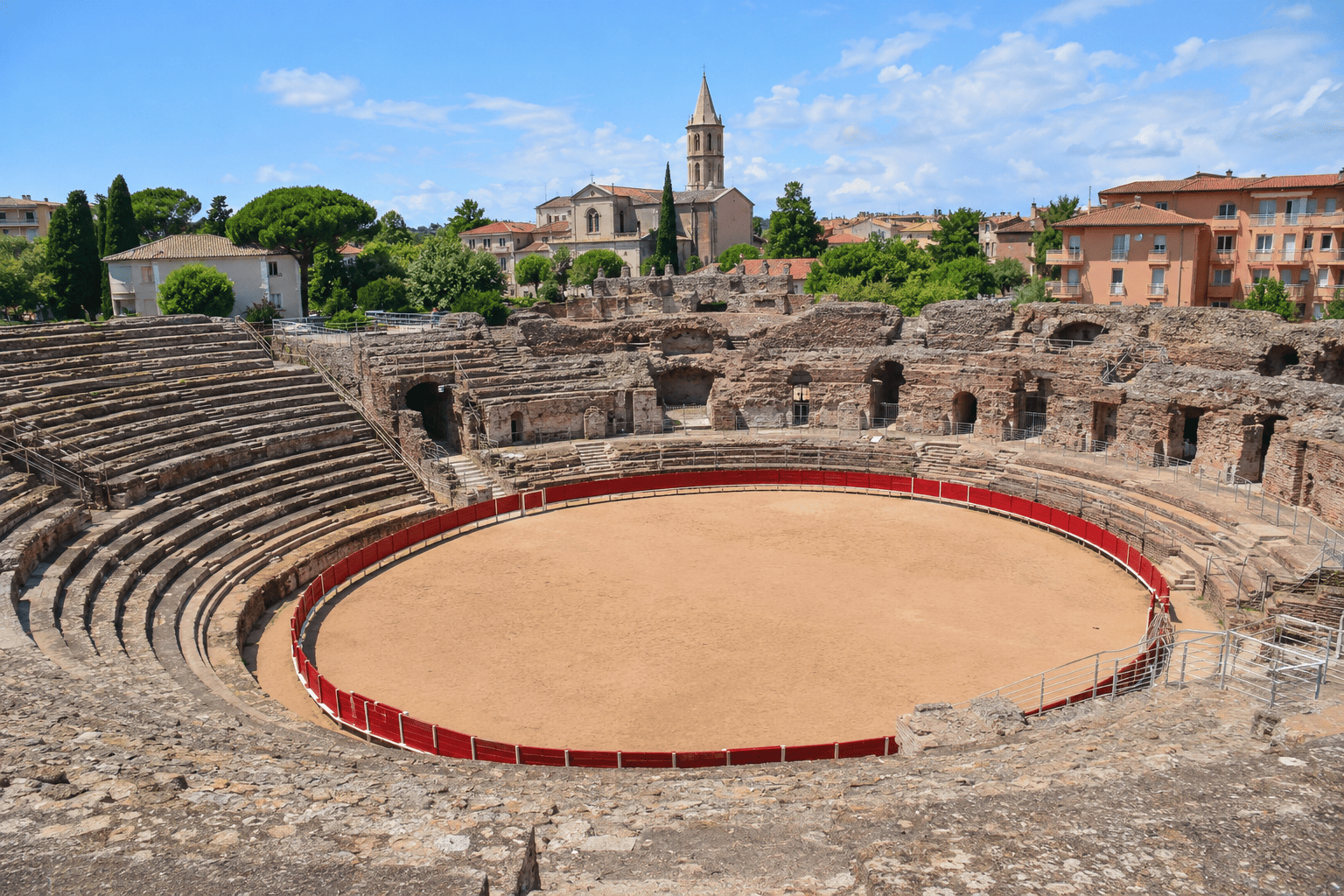
How do you enjoy the Roman arena, the beaches and the Esterel trails without giving up comfort? Discover our selection of luxury campsites on the French Riviera and book your base with pool, spa and Mediterranean views, close to Fréjus.