
Blog
The largest discovery park for the oceans of Brittany, Océanopolis Brest immerses you in the seas of the world, from the Brest roadstead to tropical waters. Here is what to see, when to come and where to stay at an upscale campsite.
Océanopolis is a science park dedicated to the oceans, opened in 1990 on the banks of the Moulin Blanc harbour in Brest. Behind its look of a giant aquarium lies a genuine science centre: you explore marine life, understand the challenges of protecting it, and meet teams of biologists who study and care for the animals.
The park is currently going through a transformation called La Métamorphose, a renovation and extension designed to make the visit more immersive. The Tropical Pavilion reopened on 4 July 2026; the Austral Pavilion, the former polar pavilion, will follow at a later stage. The Brittany Pavilion, the Otter Trail, the Cité des Océanautes and Océanolab, meanwhile, remain open.
Océanopolis is organised around three pavilions, each devoted to a major marine ecosystem, which you walk through like stages of a journey. It is this diversity that makes the visit so rich, from Brittany to the poles.
The Brittany Pavilion opens the route with the fauna of the local coasts: shoals of fish from the roadstead, spider crabs, langoustines, hypnotic jellyfish and a touch pool where you can stroke starfish and small invertebrates.
The Tropical Pavilion then switches the scene to the tropics, with its greenhouse of rare plant species, its shark tank traversed by a panoramic lift and its brightly coloured coral reefs.
The Austral Pavilion, finally, recreates the deep cold: pack ice, penguins and seals tell the story of life in the polar seas.
Two encounters draw the most attention from visitors: the sea otters and the penguins. The Otter Trail showcases North Pacific sea otters, a species that is rare in Europe, which you can watch swimming, grooming and feeding on their backs, a spectacle that delights children and parents alike.
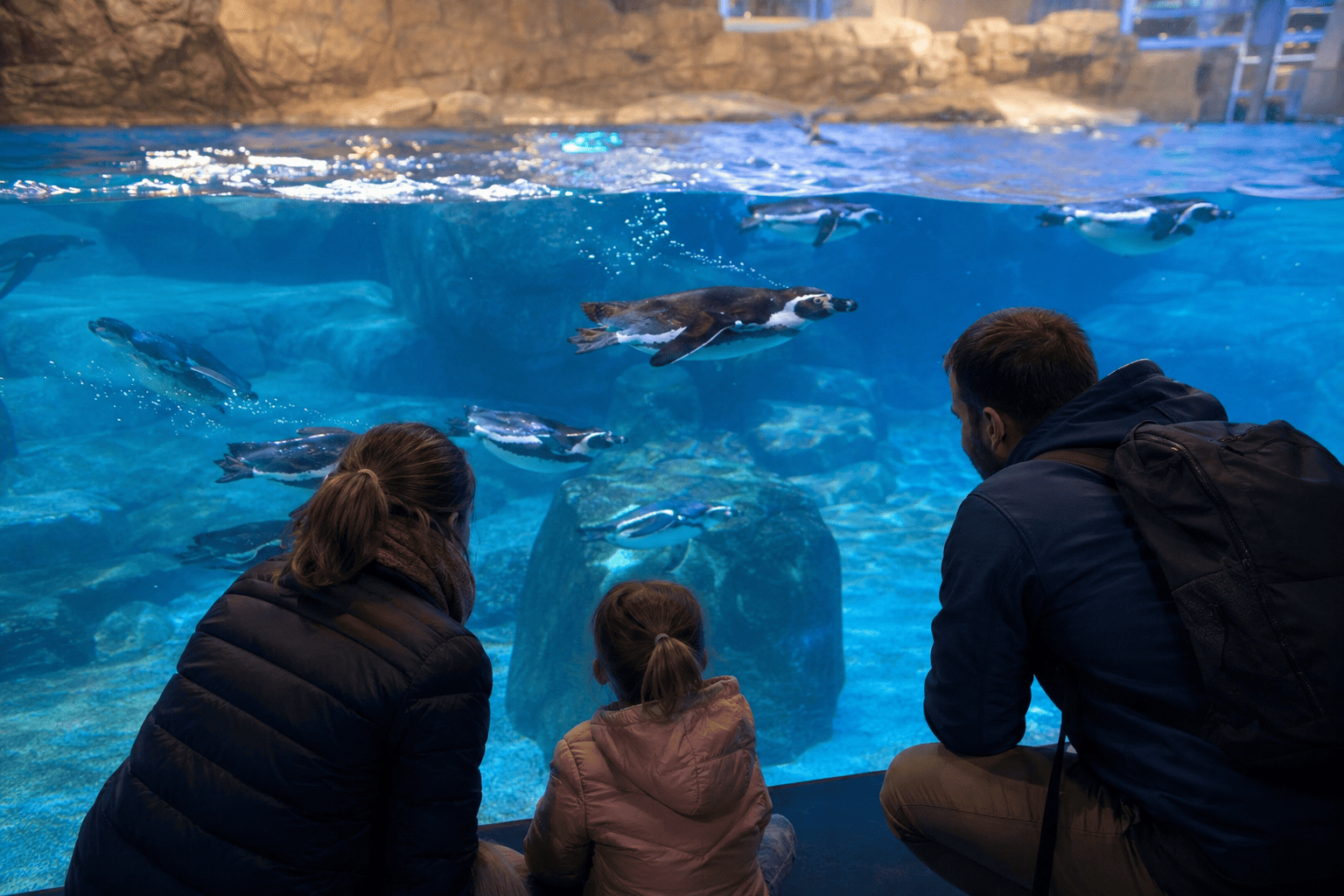
On the side of the deep cold, the penguin enclosure is among the largest in Europe, with a colony of around forty penguins. The feeding sessions, explained by the keepers, mark out the day and help you understand the daily life of these birds and of the neighbouring seals. These highlights take place at fixed times, so it is worth checking the programme of events as soon as you arrive.
Our team’s favourite: time your visit around the feeding times to see the most active animals, then save the Brittany Pavilion for last, once the school groups have left. The touch pool, where children stroke starfish, is often their best memory of the day.
Océanopolis lends itself particularly well to a family outing, with areas designed for the youngest visitors. The Cité des Océanautes offers playful, interactive exhibits that introduce children to marine biology, while Océanolab opens the workshop of research as it happens.
Allow 3 to 4 hours to enjoy the open pavilions at an unhurried pace, longer if you follow several activities or take a break at the park restaurant.
A seasonal tip: in July and August, mornings and late afternoons are quieter than the middle of the afternoon, which is ideal with young children.
Océanopolis is open all year, with longer hours in summer. Here are the essentials for organising your trip:
For up-to-date opening hours and prices, see the official Océanopolis website.
Extending the discovery of the oceans with a stay in the countryside is exactly what Finistère offers: the tip of Brittany combines coves, coastal paths and upscale campsites a short distance from Brest. After a day at Océanopolis, nothing beats a comfortable stay with a pool and a wellness area to unwind as a family.
Looking to combine a visit to Océanopolis Brest with a comfortable stay facing the Iroise Sea? Find your upscale campsite in Brittany and plan a holiday that blends nature, culture and relaxation!
Océanopolis is the ocean discovery park in Brest, both an aquarium and a science centre. Opened in 1990 at the Moulin Blanc harbour, it presents the marine life of Brittany, the tropics and the poles through three themed pavilions and several educational areas.
Allow 3 to 4 hours to visit Océanopolis at a relaxed pace and enjoy the open pavilions. The visit easily stretches to half a day if you follow several activities, attend the feeding sessions and have lunch on site.
At Océanopolis Brest you can watch North Pacific sea otters, a large penguin colony, seals, sharks, jellyfish, and the fauna of the Breton coasts such as spider crabs and langoustines. The Tropical and Austral pavilions complete the visit with corals and polar species.
Océanopolis is open all year from 9:30 am, closing at 6 pm outside the season and at 7 pm in peak summer. The full price is around €22.90 for an adult and €14.60 for a child, with discounts and passes available. Check the up-to-date information on the official website before you set off.
Yes, Océanopolis has free parking right next to the entrance, at the Moulin Blanc marina. The park is about ten minutes from the centre of Brest and is easy to reach by car or by public transport.