


guide
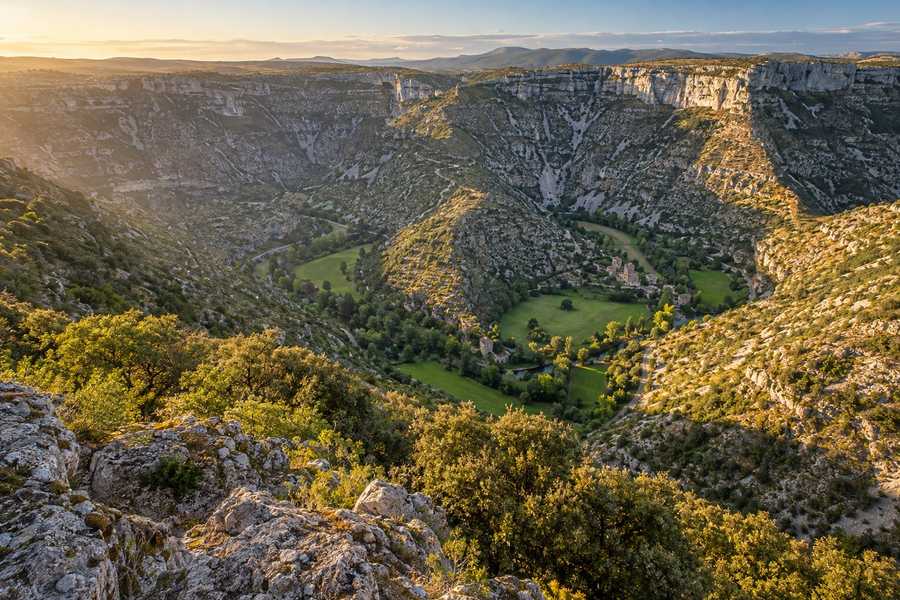
Seen from its viewpoints, the Cirque de Navacelles takes your breath away: a huge amphitheatre of limestone cliffs more than 300 metres high, at the bottom of which a small stone hamlet watches over an old river meander. On the border between Hérault and Gard, a landscape shaped by the Vis, it holds the Grand Site de France label and is part of the Causses and Cévennes landscapes listed as a UNESCO World Heritage Site.
Here is how to discover it: the two viewpoints, the descent to the hamlet, the waterfall, the walks and our practical advice for a successful visit from the Hérault coast.
| Information | At a glance |
|---|---|
| Where | Between the Causse du Larzac and the Causse de Blandas, straddling Hérault and Gard |
| To see | Baume Auriol and Blandas viewpoints, the hamlet of Navacelles, the Vis waterfall |
| Labels | Grand Site de France, Causses and Cévennes UNESCO World Heritage Site |
| Access | About 1 h 15 from Montpellier, 1 h 30 from the Hérault beaches |
| Good to know | Free shuttle buses between the viewpoints and the hamlet in season |
| Recommended time | Half a day, or a full day with a walk |
The cirque is the work of the Vis, a river that carved a deep canyon into the limestone of the causses over millennia. In that canyon it traced a wide loop around a rocky hill. One day it broke through the neck of that loop and took a shortcut, leaving the old loop dry. It is this abandoned meander, now covered with meadows and fields, that forms the floor of the cirque, with the isolated hill at its centre.
The river’s shortcut created a waterfall at the foot of the hamlet, which remains one of the loveliest corners of the site.
The cirque is first discovered from above, from two viewpoints facing each other.
Come early in the morning or late in the afternoon: low light brings out the relief and there are fewer visitors. In summer, the viewpoint car parks fill up quickly.
A winding road descends from the Baume Auriol viewpoint to the hamlet of Navacelles, nestled at the bottom of the cirque. You can stroll between stone houses, narrow lanes and a small old bridge, before reaching the Vis waterfall a few steps further on. A few restaurants and a crêperie make it possible to have lunch on site.
In season, free shuttle buses connect the viewpoints with the hamlet: a good way to avoid the narrow road and the crowded car parks below. Check the timetables on the Grand Site website before you visit.
Several paths let you discover the cirque on foot, with one thing in common: the descent is easy, but the climb back up to the causses is steep.
Bring water, a hat and good shoes: shade is scarce and summer heat can be strong. In spring and autumn, the light and temperatures are ideal.
The cirque belongs to the territory of the Causses and Cévennes, inscribed on the UNESCO World Heritage List in 2011 as a Mediterranean agropastoral cultural landscape. Dry-stone walls, lavognes (stone water-catchment pits), sheepfolds and flocks of sheep tell of centuries of livestock farming on the plateaus. Respect the meadows, fences and flocks, and keep to the marked paths.
The cirque is easily combined with other sites in the hinterland: Saint-Guilhem-le-Désert with the Pont du Diable, the Clamouse cave, the Grotte des Demoiselles near Ganges, or the Lac du Salagou and its red earth. A good day of discovery away from the beaches, before returning to the coast in the evening.
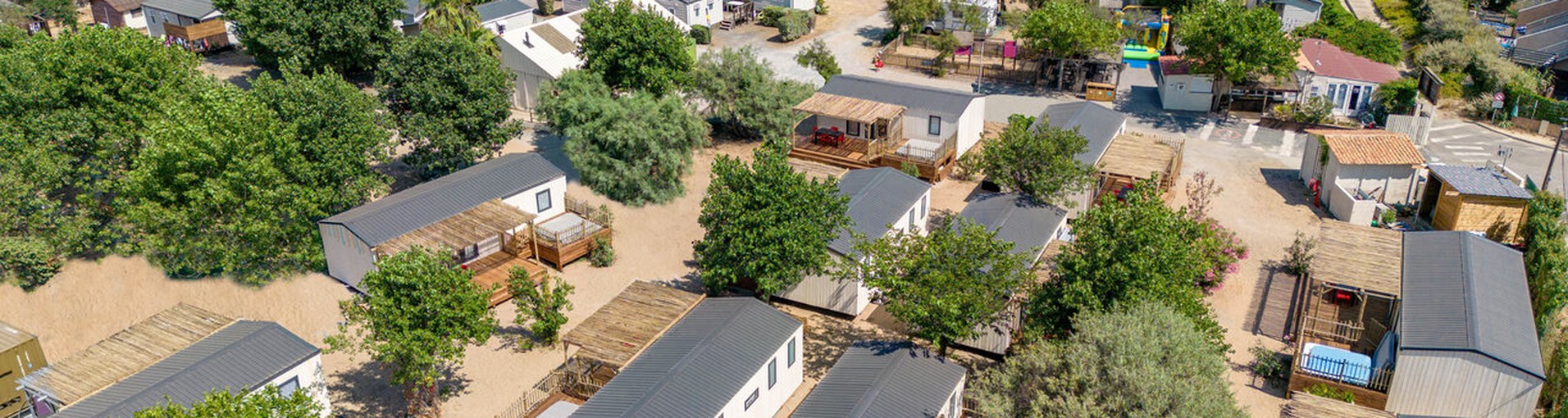
To combine beaches and hinterland, stay on the coast and set off for the day. At Vias, the camping Californie Plage sits right on the sea, with a pirate-themed water park. At Agde, the camping Les Champs Blancs has a 3,000 m² water complex and mobile homes with a private spa, and at Marseillan, the camping Robinson offers direct access to the sandy beach and a wellness area. Allow about an hour and a half’s drive to the cirque. Browse all our luxury campsites in Hérault.
The Cirque de Navacelles is one of the most spectacular landscapes in southern France, and it is easy to discover in a day from the Hérault coast. Start at Baume Auriol, go down to the hamlet by shuttle or on foot, and leave time for the waterfall. Spring and autumn are the best seasons: cooler, quieter and with superb colours.
Campsites marked “Partner” are Aimer Camper members and are shown first. All results match your search.


